

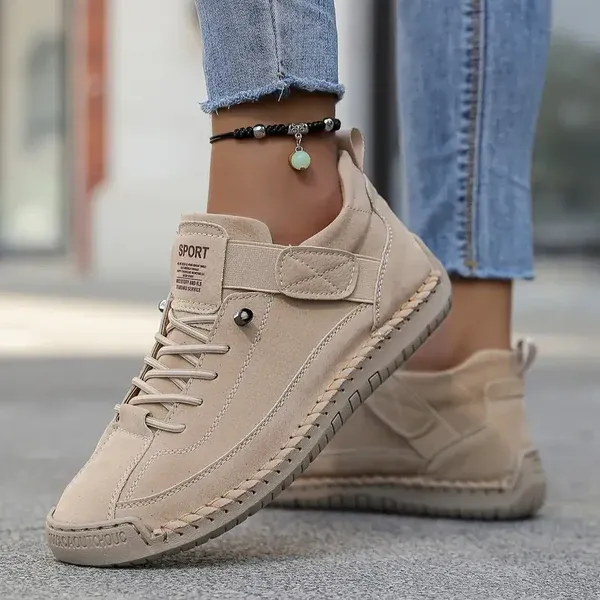
 Liora Wide-Toe Sneakers Foot-shaped everyday comfort
 Most people blame sore, tired feet on long days, age, or hard floors. But the shape of the shoe itself can be part of the problem. Many everyday sneakers narrow sharply at the front, pressing the toes inward instead of letting them rest in their natural position.
Repeat that pressure day after day and the forefoot has less room to spread as it meets the ground. Toes may rub, overlap, or feel compressed; the arch may feel unsupported; and the body may compensate with a shorter, less natural stride.

The hidden problem: your shoes may be shaping your feet
Foot shape varies, but healthy shoe fit follows a simple idea: the shoe should follow the foot, not force the foot to follow the shoe. Correction starts by removing unnecessary crowding and giving the toes enough space to sit flatter and spread more naturally.
Start by restoring space, then add support
“A square or round toe box will provide more room and comfort by allowing the toes to lay flat.”
Guidance summarized from AAOS OrthoInfo and NHS footwear advice.
This is where a wide-toe comfort shoe can make a meaningful difference. Rather than pushing the forefoot into a pointed outline, Liora gives the toes room to return toward a more natural arrangement while the arch and heel remain supported.
Four design details that support natural alignment
- A rounded toe box that allows the toes to spread instead of overlap
- A contoured footbed that supports the arch through each step
- A stable heel shape that helps keep the rearfoot securely positioned
- Forefoot flexibility so the shoe bends where the foot naturally bends
How Liora supports a more natural foot position
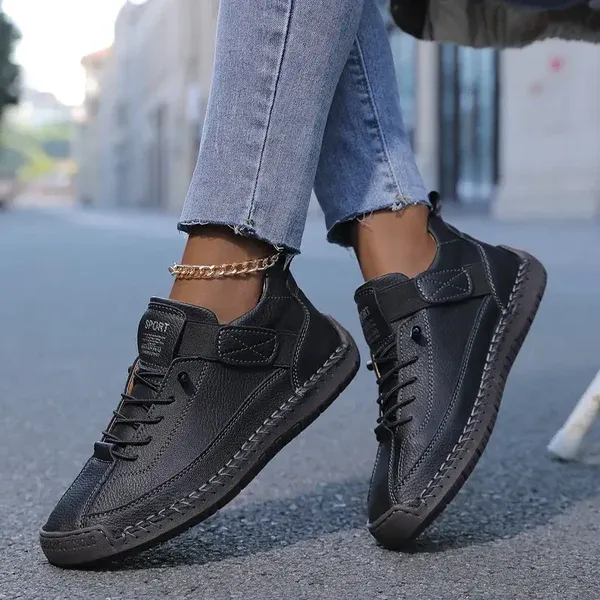
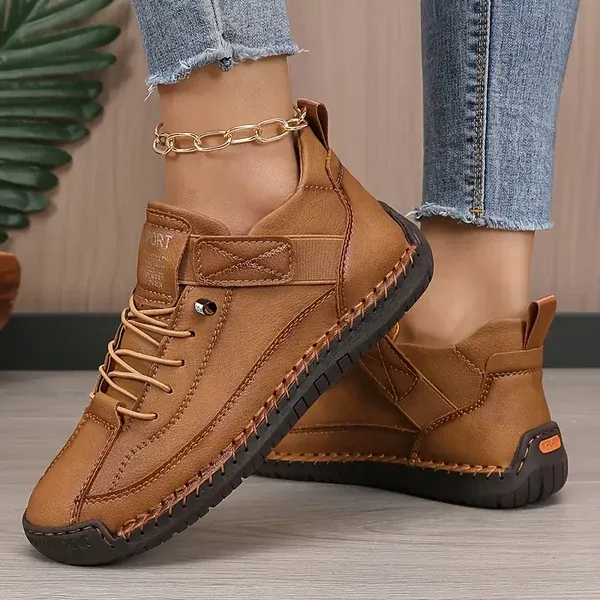
Liora brings these principles together in a casual everyday silhouette. The rounded forefoot reduces side pressure around the toes, while the cushioned sole supports comfortable heel-to-toe movement. Elastic laces and an adjustable ankle strap help secure the foot without relying on a tight toe area.


Liora Ergonomic Comfort Sneakers
Foot-shaped toe room, lightweight cushioning, a flexible outsole, elastic laces, and an adjustable ankle strap.
See colors, sizes, and current offer →How Liora’s support system works from heel to toe
Toe space is only the beginning. For the foot to settle into a more natural position, the rearfoot needs to feel secure, the middle of the foot needs gentle support, and the toes need room to spread as body weight moves forward. Liora combines those three zones in one everyday shoe.
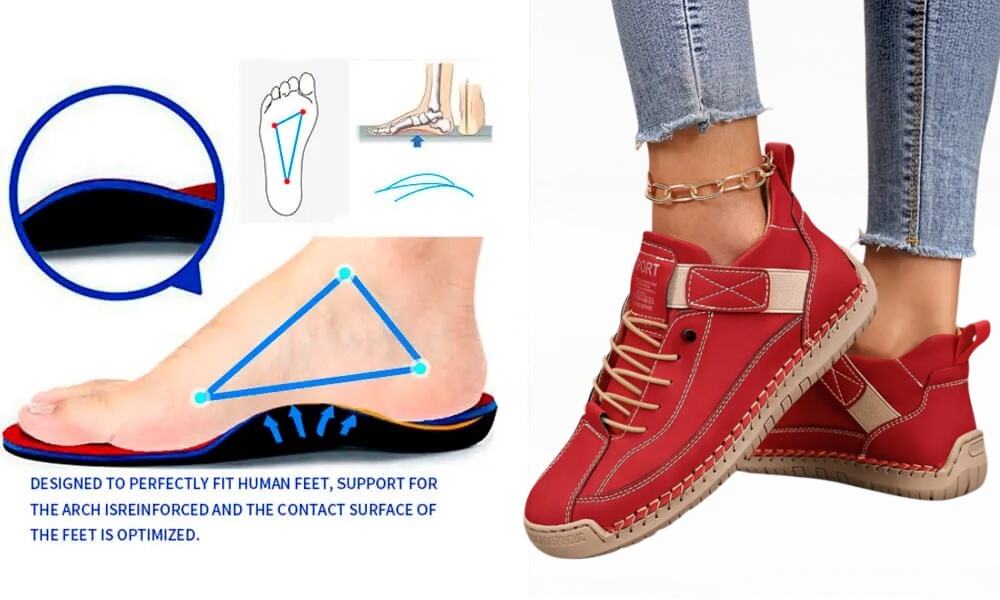
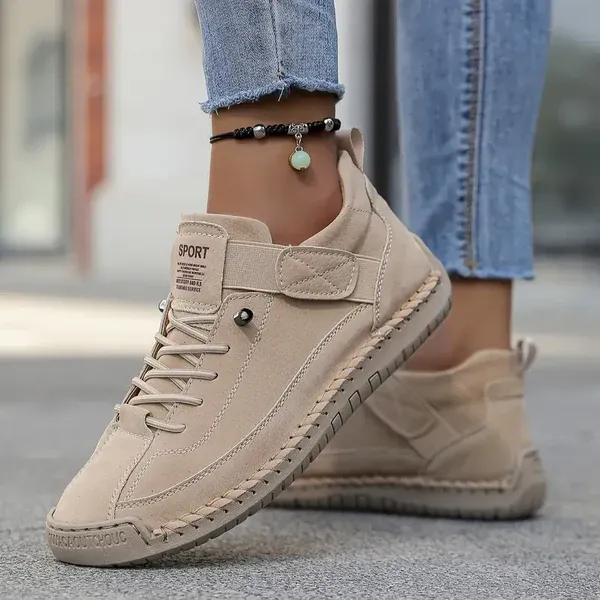
Support that follows the foot’s natural shape
A more secure heel can help reduce unwanted sliding inside the shoe.
Shaped cushioning provides a steadier surface beneath the middle of the foot.
Extra width allows more natural toe position during standing and walking.
How cushioning changes the feel of each step
Walking repeatedly loads the heel and forefoot. Hard, flat soles can make that contact feel abrupt, especially on pavement or indoor floors. Liora’s thicker EVA outsole is designed to soften the landing, distribute pressure across a wider base, and remain flexible enough for the foot to roll forward.

Cushion, guide, then release
Why foot-care professionals begin with a hands-on assessment
A foot assessment does not start with the shoe—it starts with how the toes rest, where pressure builds, whether the heel remains stable, and how the foot moves under load. That is why professional footwear guidance so often emphasizes shape and fit before extra padding or fashion details.
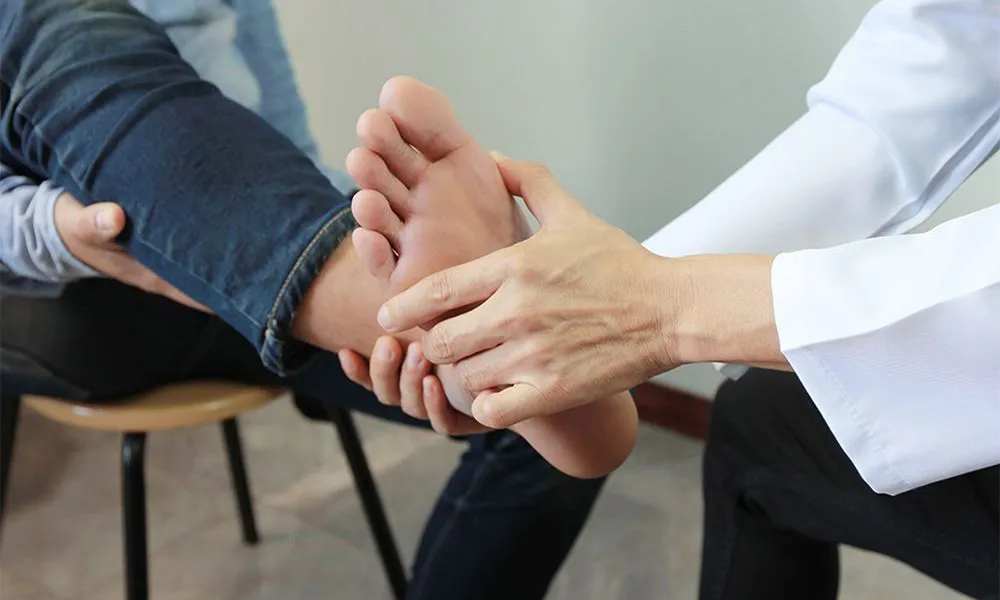
- Whether the toes are crowded or able to lie flatter
- Where rubbing and pressure appear around the forefoot
- Whether the heel stays stable during a step
- Whether the sole bends with the foot at toe-off
The practical takeaway is straightforward: a comfort shoe should match the outline of the foot, not compress it into a narrow silhouette. Liora’s wide front, secure heel, flexible outsole, and adjustable closure are designed around that heel-to-toe approach.
Why everyday wear matters
Better alignment is easier to encourage when a foot-shaped shoe fits naturally into daily life. Liora’s low-profile design works for relaxed walks, errands, commuting, and travel, giving the toes consistent space without looking like specialized orthopedic footwear. Multiple colors also make it easier to apply the same comfort principles more often.
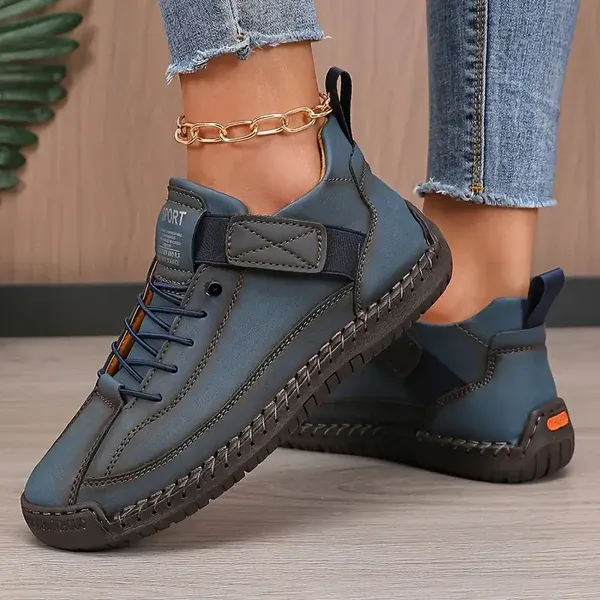
Correct sizing is part of better alignment
Even a wide-toe design cannot support a natural position if the length is wrong. Measure from the heel to the longest toe, include the socks you normally wear, and compare the result with the current product-page size guide. The toes should have room to move without the heel sliding.
Individual fit and comfort vary. Measure both feet and use the current product-page size guide before ordering.
Give your feet room to find their natural position
Explore Liora’s wide-toe design and check current pricing, colors, sizing, delivery, and return terms.
View the Liora product page →
Join the conversation
Comments are moderated. Please keep the discussion helpful and respectful.